
What Is the Dolpo Trek?
Dolpo sits in the far northwest of Nepal, pressed against the Tibetan plateau and ringed by the Dhaulagiri massif. It remained closed to outsiders until 1989, and the numbers haven't climbed much since: fewer than 400 trekkers visit each year. That figure tells you more about the experience than any description can.
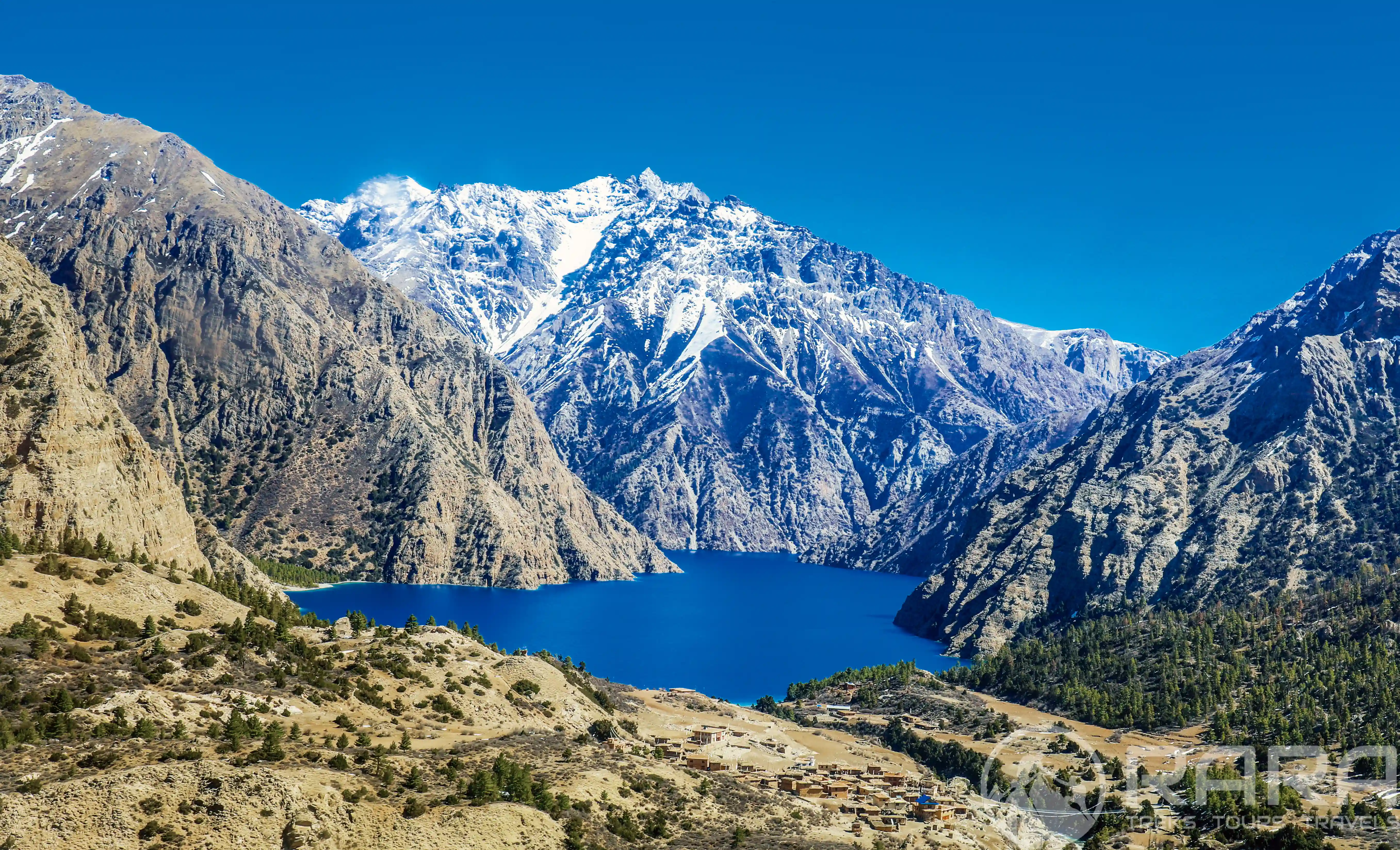
The landscape is unlike anything else in Nepal. The southern approach winds through deep river gorges and pine forest before opening onto the Tibetan plateau proper — windswept, ochre, and enormous. Villages like Ringmo and Saldang have been inhabited for centuries and still follow Bon and Tibetan Buddhist traditions with minimal outside influence. Phoksundo Lake, the centrepiece of the lower route, is 145 metres deep and shifts colour from turquoise to midnight blue depending on the light.
Peter Matthiessen made this region famous in The Snow Leopard (1978). The French documentary Himalaya (1999) brought it to a wider audience. Neither fully prepares you for it.
Dolpo is not for every trekker. The altitude is serious, the trails are rough, and the logistics are expensive. But for people drawn to genuinely untouched landscapes and living Himalayan culture, it consistently delivers something that more accessible treks cannot.
Upper Dolpo vs Lower Dolpo
Dolpo divides into two trekking zones with separate permit requirements and very different characters.
Lower Dolpo
Duration: 14–18 days | Highest point: ~5,190 m (Numa La Pass)
The lower route centres on Phoksundo Lake and the village of Ringmo — a Tibetan settlement at 3,640 m where the Bon religion has been practised continuously for over a thousand years. The monastery above the village is one of the oldest active gompas in Nepal.
The route crosses two significant passes — Numa La (5,190 m) and Baga La (5,070 m) — making it a genuine high-altitude challenge. Trails are more defined than the upper circuit, and basic teahouse accommodation exists in villages along the way. Most groups fly into Juphal from Nepalgunj, cutting two days off the walking approach.
Lower Dolpo suits fit trekkers with high-altitude experience who want a serious route without committing to a full month in the field.
View Lower Dolpo Trek 17 Days Itinerary
Upper Dolpo
Duration: 21–28 days | Highest point: ~5,360 m (Kang La Pass)
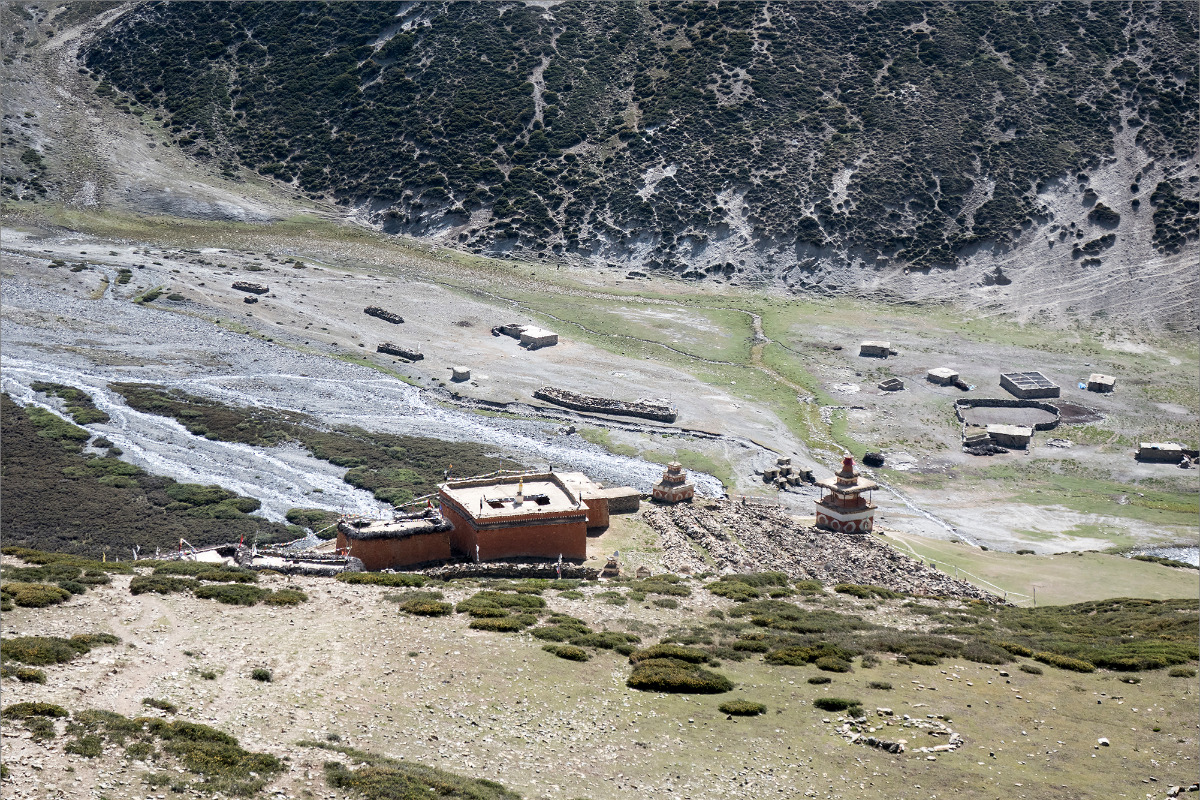
Once you cross the Kang La into the inner plateau, the landscape changes entirely: wide, treeless valleys, yak herder camps, ancient trade routes, and a near-total absence of other trekkers. The destination is Shey Gompa — the Crystal Mountain monastery — a pilgrimage site of deep spiritual significance in both Tibetan Buddhism and the Bon tradition.
There is no teahouse infrastructure in Upper Dolpo. Everything travels with the group — tents, kitchen, food, fuel. It is a full expedition-style trek, and most people who complete it describe it as the most significant journey they have made on foot.
View Upper Dolpo Trek Expedition Details.
Comparison
| Lower Dolpo | Upper Dolpo | |
|---|---|---|
| Duration | 14–18 days | 21–28 days |
| Difficulty | Challenging | Very Challenging |
| Permit cost | USD 50/week | USD 500/10 days |
| Accommodation | Basic teahouses + camping | Full camping only |
| Key experience | Phoksundo Lake, Ringmo village | Shey Gompa, plateau landscapes |
| Best suited for | First visit to the region | Experienced Himalayan trekkers |
Recommendation:
Lower Dolpo is ideal for first experience. Upper Dolpo is for experienced high-altitude trekkers. Combined route gives the full expedition experience.
How Much Does the Dolpo Trek Cost?
Dolpo is the most expensive trekking destination in Nepal. Understanding why helps you budget realistically.
- Lower Dolpo: USD 2,500 – 4,000
- Upper Dolpo: USD 4,500 – 7,500
- Combined route: USD 6,000 – 10,000+
What Drives the Cost
Permits. The Restricted Area Permit for Upper Dolpo costs USD 500 for the first 10 days, plus USD 50 per additional day. Lower Dolpo is USD 50 per week. Shey Phoksundo National Park entry adds NPR 3,000 (around USD 22) per person.
Mandatory guide and crew. Independent trekking is not permitted in restricted areas — all trekkers must be accompanied by a licensed guide from a registered agency. In Upper Dolpo, a full crew of cook, assistants, and porters or yak teams is standard. This is the logistics of supplying a group in a region with no resupply points.
Flights. You fly Kathmandu–Nepalgunj (USD 170 ) then Nepalgunj–Juphal (USD 170). Mountain weather causes frequent delays — budget 2–3 extra nights in Nepalgunj at both ends.
Full camping in Upper Dolpo. Every tent, sleeping mat, and meal must be carried in from Nepalgunj. Yak hire, fuel, and complete food supplies for 20+ days account for a large share of any Upper Dolpo package.
The most practical way to reduce per-person cost is joining a group departure, where 8–12 trekkers share the fixed overheads of guide fees, crew wages, and equipment.
How Difficult Is the Dolpo Trek?
Dolpo is rated strenuous to extreme, depending on the route.
For a useful comparison: Everest Base Camp reaches a similar altitude (~5,364 m) but follows well-maintained trails with teahouse accommodation every few hours. Dolpo involves the same elevations on rough, often unmarked terrain, with no infrastructure safety net and daily stages of 6–9 hours of walking. The combined circuit covers 180–220 km.
To do this trek comfortably, you should arrive with at least one previous high-altitude trek above 5,000 m (Everest Base Camp, Annapurna Circuit, or Manaslu), strong cardiovascular fitness built over 3–4 months of training, and an honest reckoning with what three weeks of remote camping involves — no mobile signal, no nearby medical facilities, no evacuation option within walking distance.
Acute Mountain Sickness (AMS) is a genuine risk above 3,500 m. Your guide will carry altitude protocols and the operator should carry a satellite communicator. Travel insurance covering helicopter rescue above 5,000 m is essential — a rescue from Upper Dolpo costs USD 5,000–10,000. Confirm your policy covers this explicitly before departure.
Dolpo Trek Permits (2026/27)
Three permits are required. All must be arranged in Kathmandu before departure — there is no permit office in Dolpo.
TIMS Card — obtained through your agency; no significant cost for group trekkers.
Shey Phoksundo National Park Permit: NPR 3,000 (approx. USD 22) per person; arranged through your agency or at the park checkpoint.
Restricted Area Permit (RAP) Lower Dolpo: 20 per person/ week USD 5 per person /week ( beyond 1 week). Upper Dolpo: USD 50 Per Day. Requires a minimum group size of two people. Must be arranged through a government-registered trekking agency only.
Allow 1–2 working days in Kathmandu for paperwork. Carry physical copies of all documents; trail checkpoints are regular and thorough.
Best Time to Trek Dolpo
Late September to early November is the primary season. The monsoon has cleared, all passes are open, and October light at altitude is exceptional. Night temperatures reach −10°C at high camps, but days are clear. This is the most reliable window for the full circuit.
Mid-May to mid-June is a secondary option. Wildflowers are out at lower elevations and passes are opening after winter. The risks are late snowfall in early May and significant heat in the river gorges before the trail climbs.
July–August Dolpo sits in a rain shadow and receives less monsoon rainfall than eastern Nepal, but high passes can be snowbound and some river crossings become dangerous. Not recommended for standard trekking groups.
December–March most passes are closed. Not practical.
For most people, October is the ideal month. Book at least 4–6 months in advance; the best guides fill their autumn slots by April.
Sample Itinerary Combined (Summary)
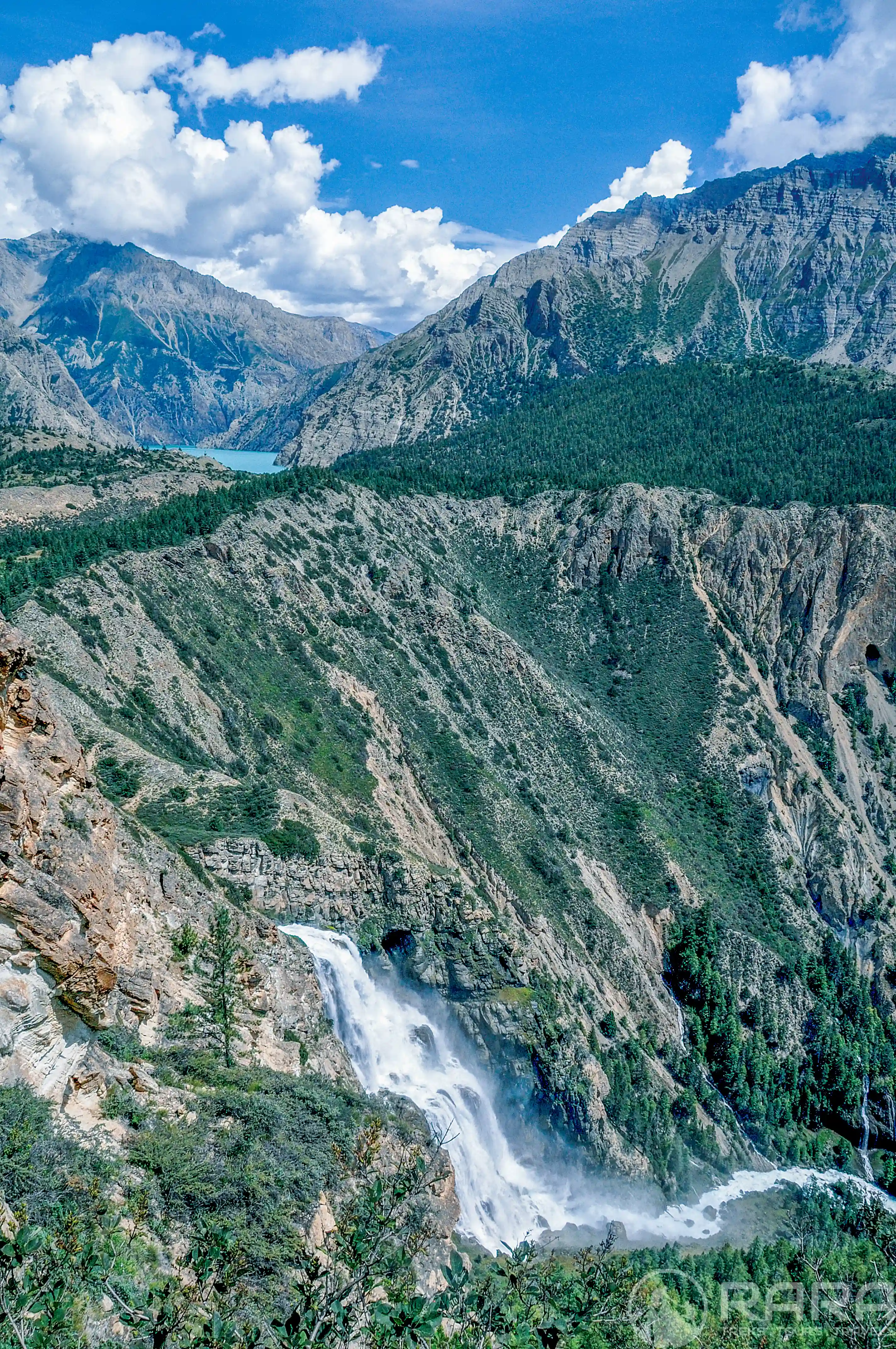
Kathmandu → Nepalgunj → Juphal → Dunai → Phoksundo Lake → Lower Dolpo → Upper Dolpo → Shey Gompa → High Passes → Return via Juphal → Kathmandu
This is a full Dolpo circuit combining both Lower and Upper regions, starting and ending with flights via Juphal.
The itinerary includes gradual ascent through Lower Dolpo, acclimatisation at Phoksundo Lake, and entry into the Upper Dolpo restricted region before crossing high passes above 5,000 meters.
Pace depends on group fitness and acclimatisation requirements. Flexibility is essential, and delays due to weather or altitude adjustment are normal in this region.
👉 Full day-by-day itinerary available in the detailed section below.
Gear Essentials
Your agency provides group equipment: tents, sleeping mats, kitchen tent, and cooking kit. The following is personal kit — your responsibility.
Clothing: merino base layers (×2), 800-fill down jacket, waterproof hardshell, waterproof trousers, two pairs of trekking trousers, thermal leggings, warm hat and balaclava, sun hat, layered gloves, wool trekking socks (×5 pairs), camp sandals.
Equipment: −20°C sleeping bag, adjustable trekking poles, headlamp with lithium batteries, dry bags for all kit, 20–25L day pack (porters carry main loads), two 1L water bottles (hydration bladders freeze at altitude), water purification backup, Category 4 UV sunglasses.
Medical: Diamox — discuss dosage with your doctor before departure. Also: ibuprofen, oral rehydration salts, blister kit, broad-spectrum antibiotics (prescribed), SPF 50+ sunscreen, pulse oximeter.
Practical: physical permit copies (two sets), travel insurance documents confirming helicopter evacuation above 5,000 m. All cash — Nepali rupees — must be brought from Kathmandu or Nepalgunj. There are no ATMs beyond Dunai. Budget NPR 1,500–2,500 per day for personal expenses: snacks, water, gompa donations, crew tips.
FAQs
Can I trek Dolpo without a guide?
No. Nepal's restricted area regulations require all trekkers in both Upper and Lower Dolpo to be accompanied by a licensed guide from a registered agency. A minimum group size of two people applies. Trail checkpoints enforce this.
How does Dolpo compare in difficulty to Everest Base Camp?
Upper Dolpo is significantly harder. EBC follows marked trails with teahouse accommodation throughout; Dolpo combines the same altitude with rough, often unmarked terrain, full camping, and longer daily stages. Lower Dolpo is comparable to a demanding version of EBC. Prior experience above 5,000 m is strongly recommended for either route.
Is there mobile signal on the trek?
Sporadic NTC coverage exists around Dunai. Beyond Ringmo, plan for complete disconnection for the remainder of the trek. Reputable operators carry Garmin inReach or similar satellite communicators — confirm this before booking.
What happens if someone gets altitude sickness?
AMS symptoms that don't resolve with rest and hydration require immediate descent. Your guide is trained to identify and respond to altitude illness. Severe cases — HACE or HAPE — require helicopter evacuation. This is why adequate travel insurance is not negotiable.
Is Dolpo worth the cost?
For the right trekker, yes. If you are specifically looking for high-altitude wilderness with intact cultural traditions and minimal trail traffic, Dolpo is unlike anywhere else in the Himalayas. If the priority is mountain scenery and comfortable lodges, Annapurna or Langtang deliver that at a fraction of the price. Dolpo is very clear about what it offers — the question is whether that matches what you're after.
Last updated: April 2026. Permit fees, flight costs, and regulations are subject to change — confirm current requirements with your agency and the Nepal Department of Immigration before departure.


